
Strategy and Planning
Every development with a public art condition needs a clear path from consent to completion: a plan council will endorse, a budget that holds and certificates issued on time. ART AID shapes that path. We write the strategy and public art plans, working side by side with our clients, council, project consultants and the community from the first brief to final sign-off, and turn a planning requirement into a defining part of the place.
Since 2017 we have prepared public art strategies and plans across NSW, Victoria and Queensland, for private and public sector clients and on State Significant Development, working within council, state and industry frameworks.
On heritage-sensitive sites, or where an opportunity sits outside a planning standard, we build the case: commissioning heritage impact assessments, resolving fixing methods, adapting designs to protect the building, and preparing the planning justification and variation requests council needs to endorse the application.
Built around project milestones
Public art is tied to the milestones that move a development forward. Our staged planning approach supports each one, from the Construction Certificate through to the Occupation Certificate. Our team identifies these milestones from day one and aligns our deliverables with the development program, so each approval stage is met with confidence.
Who we work with
Developers and development managers with a public art requirement in their approval, whether it sits in council planning controls, a condition of consent, a Voluntary Planning Agreement or a State Significant Development. We also work with asset owners, brands and precincts planning artwork, installations and activations that need their own approval, and collaborate with councils on governance frameworks for long-term cultural programs.
Capabilities
- Public art strategies that set the curatorial vision and direction for a development or precinct, ahead of or alongside formal plans
- Staged public art plans for development applications and State Significant Developments, from preliminary and detailed plans through to the Final Public Art Report and sign-off
- Precinct-wide public art plans for multi-building, multi-stage developments
- Public art masterplans for precincts and urban renewal areas
- Public art and cultural input as a specialist consultant within urban design and masterplanning teams
- Development applications for standalone artworks and murals
- Site, history and context research, including heritage interpretation
- Heritage impact assessments, commissioned and coordinated with specialist heritage consultants
- Planning justification and variation requests where an artwork sits outside a development standard
- Cultural consultation pathways with Traditional Custodians and Local Aboriginal Land Councils
- ICIP protocols for First Nations artists and content
- Artwork opportunity mapping and budget frameworks
- Expression of interest development and management, from the artist brief and callout through evaluation panels to final selection
- Artist concept development and materials selection for detailed public art plans
- Council liaison and presentations to public art advisory panels
- Fabrication, installation and engineering methodologies, coordinated with the construction program
- Maintenance plans with annualised costs, plus ownership and deaccession agreements
- Governance frameworks for long-term programs, including VPA-mandated artist studios
Methodology
Our approach to planning permanent public art, from the first brief to the Occupation Certificate.
01
Before Construction Certificate
Preliminary Public Art Plan.
We research the site, including its First Nations history, heritage and community, and analyse the conditions of consent, council policy, state guidelines and the NAVA Code of Practice. The plan sets the vision, curatorial themes, artwork opportunities, budget, selection method, ICIP protocols and approval pathway.
02
Before Construction Certificate
Detailed Public Art Plan.
We develop and run the artist selection, by direct invitation, limited competition or public EOI, then work with the selected artists through concept development and materials. The plan documents form, scale, location, fabrication and installation methods, engineering, maintenance and ownership, and we present it to council for endorsement.
03
Before Occupation Certificate
Final Public Art Report.
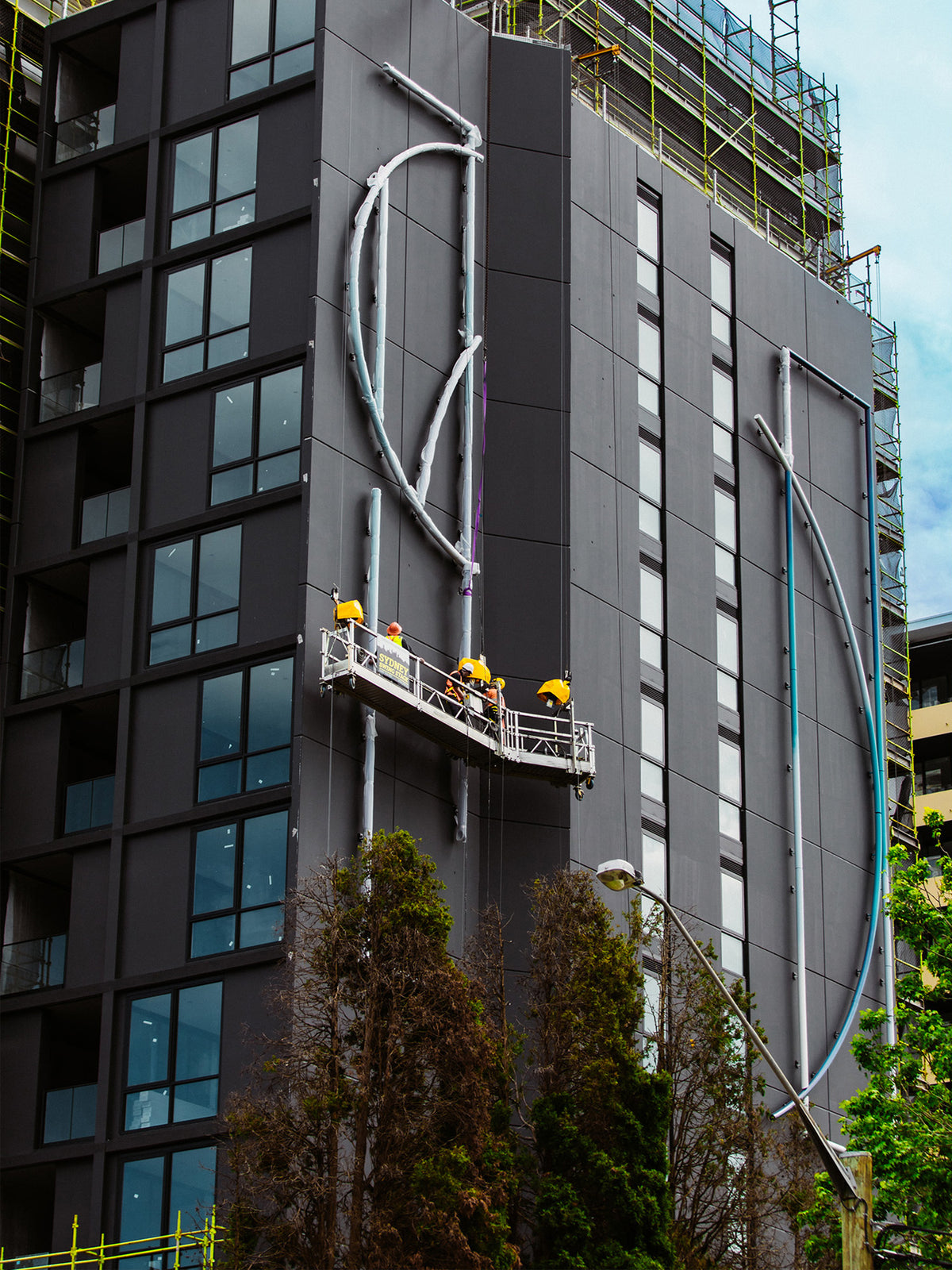
We oversee fabrication and coordinate installation, acting as the link between artist, builder and client so the program runs seamlessly. We then document the completed artworks, engineering, maintenance and ownership, confirming every public art commitment has been met so the Occupation Certificate can be released.
When the artwork needs its own approval
Standalone artworks, murals and brand commissions frequently require a development application of their own. Depending on the council, this can apply to every site, and within heritage conservation areas it extends to buildings that are not individually listed. We prepare the application, commission heritage impact assessment where required, resolve the fixing and installation method, prepare the planning justification for any variation, and write the Plan of Management that governs the work once installed, managing the application from lodgement through to determination.
Selected projects
- THE MASTERY WATERLOO
- ARCHER & ALBERT
- 40 KENSINGTON STREET
- 598–610 CROWN STREET
- CENTRAL COAST QUARTER
- PRECINCT 75
- 175 LIVERPOOL STREET
- STORHUB ALEXANDRIA
- EQUINIX ALEXANDRIA
- WHITE STREET GANTRY
- HERITAGE LANES
- CHARLIE PARKER
- EPPING ROAD MACQUARIE PARK
- 8 PHILLIP STREET
- LACHLAN AVENUE MACQUARIE PARK
- CLYDE STREET SOUTH GRANVILLE
- WENTWORTH POINT
Frequently asked questions
What is a public art plan?
A public art plan sets out the artwork a development will deliver, including locations, themes, budget, artist selection and program. It is typically prepared as three strategic planning documents: a preliminary plan, a detailed plan once artists and concepts are confirmed, and a final report on completion, tied to the Construction and Occupation Certificates. Stage names and requirements vary between councils and conditions of consent.
What's the difference between a public art plan and a public art masterplan?
A public art plan responds to a specific development approval, and can cover a single building or a multi-stage precinct of several buildings. A masterplan sits above individual approvals, setting a long-term vision and framework for art across a precinct, an urban renewal area or a series of future developments, so each plan that follows works toward the same idea of place. We offer both.
Does my development need public art?
Public art requirements are set through each council and approval, so they differ from project to project. They can sit in local planning controls, a Voluntary Planning Agreement, the conditions of consent or a State Significant Development approval. We review the requirements for each site at the outset, so obligations are identified early and built into the program.
When should we engage a public art consultant?
As early as possible. Every public art project has its own approval pathway and lead times, and early engagement allows requirements to be identified, budgeted and aligned with the program, from approvals and artist selection through to installation. For public art tied to a development consent, the ideal point is the development application stage.
How are artists selected for our project or program?
We recommend the selection route that best suits the budget, program and project requirements, whether a direct invitation, a limited competition or a public expression of interest. We then write the artist brief, run the callout and manage the evaluation panel, with the final decision resting with the commissioner. From there, we guide the selected artists through concept and design development in line with the NAVA Code of Practice.
Who owns and maintains the artwork once it is installed?
Ownership and maintenance are agreed during planning and documented in the plan, including maintenance requirements, annualised costs, ownership arrangements and principles for future relocation or deaccession. Responsibility typically sits with the building owner or, where an artwork is dedicated to council, with council.
What is ICIP, and how is it addressed?
ICIP stands for Indigenous Cultural and Intellectual Property, the rights of First Nations people to their heritage, knowledge and cultural expression. Where a project involves First Nations artists, stories or content, we embed ICIP protocols in the plan from the outset, in line with the NAVA Code of Practice, covering consultation, ongoing consent, attribution and benefit sharing, so cultural knowledge is respected and protected for the life of the artwork.
Can ART AID deliver the artwork as well as the plan?
Yes. Planning, curation and delivery sit within one team, so the thinking behind the plan carries through to the finished work. Our delivery services, from artist contracts and fabrication through to installation and handover, are detailed on the Curation and Delivery page.
Have a public art condition to meet? Let's map the path together.
Talk to us about your project
